Nonviolence and the Half-time Shows
- Rebecca Burnham
- Feb 12
- 7 min read


We’re in the middle of the “Season for Nonviolence,” an annual commemoration established by the M.K. Gandhi Institute for Nonviolence that spans the 64 days between January 30 (Mohandas Gandhi’s assassination) and April 4 (Martin Luther King’s). This is meaningful to me for a multitude of reasons, and especially right now as I watch dissent, alienation, and deep distrust being expressed in verbal violence that occasionally explodes into deadly conflict. There are recent, frightening incidents of the latter that I don’t want to explore, because I don’t think that rehashing them helps us understand how to do better. Instead, I’d like to focus on nonviolent ways of relating, ways that are rooted in treating each other with so much dignity that we can’t be content with our world until it’s meeting the needs of all. Summit Stages is all about using musical theatre to build such a society, described by Martin Luther King as “the Beloved Community.” Nonviolence is a key to getting there.
Superbowl Sunday offered us two attempts to impact society with musical performances. Nonviolence gives us the tools to examine those in a way that can lead to deeper compassion instead of alienation.
Gandhi, a devout Hindu, believed that faith in God was essential to a “living faith in non-violence.” He explained, “A nonviolent man can do nothing save by the power and grace of God. Without it he won't have the courage to die without anger, without fear and without retaliation. Such courage comes from the belief that God sits in the hearts of all and that there should be no fear in the presence of God. The knowledge of the omnipresence of God also means respect for the lives even of those who may be called opponents”.
His position reminds me of a story from my faith tradition, about two rival nations, the Nephites and the Lamanites, who were constantly fighting while blaming the other side for causing the contention between them. The Nephite record keeper tells of a time when many among his people decided the best way to defend themselves would be to go to war and completely destroy the Lamanites.
But that’s not what happened. Instead, their kings’ four sons, who had experienced a heavenly manifestation of God’s love and goodness, transforming them from angry rebels to devout peace-builders, went to preach their faith among the Lamanites. A series of miraculous events followed, resulting in the conversion of seven entire cities, as well as the transformation of the supreme Lamanite king from a tyrant, ruling by threat of death, to a devotee of law who sought to rule by persuasion.
That worked well among the converts of the seven cities. But not so great in the rest of the land, where their king’s conversion to the faith of their traditional rivals came across as betrayal, and his abandonment of the customary forms of enforcement probably resulted in social upheaval. So the rest of the Lamanites decided to take up arms against the seven cities in order to depose the king and place somebody else on the throne in his place.
It looked like civil war was inevitable. Only, the converts were no longer willing to see their brothers as enemies, even though those brothers wanted to kill them. They recognized that their traditions of enmity are so ingrained that if they took up arms in this case, they would lose the enlightenment that had transformed them. So instead, they gathered together, made a covenant to never shed blood again, and together they buried their weapons of war in the earth.
When the unconverted Lamanite forces approached, the converted Lamanites prostrated themselves on the ground and began to pray. The soldiers killed 1005 of their unresisting brothers before they could no longer bear it. Many on the front lines threw down their weapons and prostrated themselves on the ground as well. The assault ended and the converts were joined that day by more than the number of those who were killed.
There’s a lot in this story (and a similar story about the forging of the Haudenosaunee Confederacy) that applies to the rival halftime shows that happened on Sunday and the controversy that’s been swirling around them ever since.

There was the official Superbowl Halftime Show, featuring artist Bad Bunny, a Puerto Rican singer who only performs in Spanish and sometimes in a dress (although he is not LGBTQ, but an ally). And there was the alternative “All American Halftime Show” sponsored by Turning Point USA. I didn’t see either of them in real time. During the Super Bowl, I was visiting with my sister-in-law whose dad was Puerto Rican. She said later this week that she’s feeling proud of her heritage.
I’m not certain why Turning Point USA felt the need to stage an alternate “All American Halftime Show” this year. I suspect it had something to do with Bad Bunny’s determination to perform in Spanish and a fear that English-speaking culture was being threatened. It’s also possible that they were just tired of half-time shows where the dancing has become increasingly sexually suggestive over the last several years. Maybe they wanted to offer a more family-friendly alternative. If that’s all, though, I wonder at their use of the “All American” in the title.
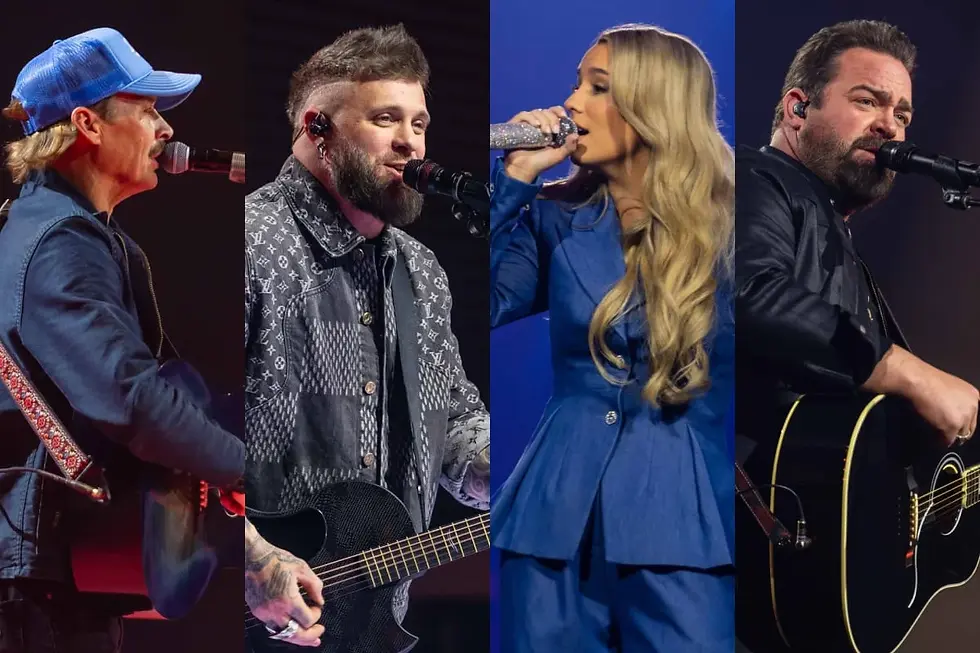
Their featured songs were an eclectic mix, including a gritty, electric-guitar accompanied national anthem, a bunch of country songs (including one about a cheating ex), some rock, and a string duet. Costuming for one of the numbers included T-shirts emblazoned with “God, Country, Family.”
By contrast, Bad Bunny’s half-time show was packed with elements that celebrate Puerto Rican culture and symbolism about the U.S. government’s exploitation of Puerto Rico and Hawaii. Its message was clear, regardless of the Spanish lyrics (some of which are apparently racy, although toned down for the Superbowl). Bad Bunny didn’t speak a word of English until the very end, when the previously banned Puerto Rican flag of independence led a parade of pan-American flags, the Superbowl billboard lit up with “THE ONLY THING MORE POWERFUL THAN HATE IS LOVE”, and Bad Bunny said, “God bless America.” Then he started listing off, in Spanish, the countries of both North and South America, including Canada, the United States, all as separate items. He finished with “mi patria, Puerto Rico. Seguimos aquí” meaning, “My homeland, Puerto Rico. We’re still here.”

Was his performance defiant? You could say that.
Was it anti-American? Ah, there’s the great question. Can you be “anti” a country that you are publicly praying for? Is it subversive to bring up a lengthy history of your people’s oppression by that country, on that country’s largest stage, hitherto dedicated to its cultural icons, while dancing and calling on the power of love?
Is subversive necessarily a bad thing? Were Martin Luther King and Mohandas Gandhi subversive? What about Jesus Christ?
Is it possible to bring about the Beloved Community without being subversive toward all the broken systems that cast us as each other’s enemies, instead of as brothers and sisters? If not, is there any more powerful way to go about it than through entertainment media. I did not see any accusations in Bad Bunny’s performance. Just the raising of a bunch of issues I was unaware of, like the forced sterilization of women working in the sugar-cane industry and the rolling power-outages caused by US companies overtaxing the power grid? I didn’t know about those issues. Now I do, a little.
Gandhi said that the goal of non-violent action is to draw attention to the suffering caused by an unjust system, so that people become unwilling to perpetuate it. I find I want to listen to the issues Bad Bunny’s performance raised. I don’t want to dismiss them as “un-American” and therefore unworthy of the Superbowl stage.
And yet… I also feel sympathy for the millions who flocked to Turning Point USA’s alternate performance. First and foremost, because I relate to blogger Bob Kircham’s explanation that “it has long been a staple of church youth group Super Bowl parties to have an alternative halftime show, especially since the “wardrobe failure” incident” of 2004, when Justin Timberlake briefly exposed Janet Jackson’s breast. The dancers at Bad Bunny’s show may have been less suggestive than other recent offerings. But I took my laptop away from the eyes of my grandchildren to watch it, and I was glad I did. I wish our entertainment culture, including that surrounding the Superbowl, treated sexuality with more reverence. I believe there is a large demographic that shares that wish and entertainers could help build community by being more inclusive of families.
Second, I hear fear in Kircham’s next sentence: “The prospect of a guy singing not in English in a ‘failure wardrobe’ begged for an alternative show.” I think I understand the “not in English” part. I regularly hear people who are white and English-speaking express a sense of not being welcome to show up and share their thoughts in a growing number of forums, because they are quickly dismissed as oppressors. For people who’ve suffered such experiences, I imagine that the Superbowl stage feels like an important symbol of belonging. And a Spanish-only performance on that stage, especially one that is critical of historical and current US policies, exacerbates the fear of losing their voices and becoming disadvantaged in mainstream society.
The “failure wardrobe” part is harder for me to understand with compassion. It sounds to me like a dig, saying he's a failure because he's performed in a dress, or that Puerto Rican clothing belongs to “failures.” It doesn’t sound like it honours Spanish speakers/ Puerto Ricans/ LGBTQ people and allies, as equals in dignity.
So what does nonviolence ask of us as a response to such expressions? I think it asks that we hear the expression and hold compassion for the person whose fears are giving rise to it. I think it involves checking in with them, to find out what, precisely, they are afraid of. Upon hearing out their fears, I think non-violence also asks that we make clear our pain around the demeaning language, express our own commitment to a world where everybody’s needs are met, and invite them to help us co-create it.
Remember: The Brotherhood sneak preview is tomorrow at 6:30 pm MST. Sign up here to watch it.
Thanks for your support for Summit Stages! If you liked this post, please consider sending it on to a friend.
If you are not already subscribed to my weekly newsletter, I'd be delighted if you'd do so here.
And a deeply, heartfelt thanks to those who've contributed to my tip jar Your support is greatly appreciated!


Apologies for length, I have a cold and my brain's foggy so my self-editing isn't great. A number of points specifically about the dancing in Bad Bunny's show.
I know nothing about dance. Music is my forte.
I didn't watch the Super Bowl or any of the halftime shows, and if I had, I would have watched the Puppy Bowl.
In my junior high school in the 1970s, we did square dancing in phys.ed. We all hated it. It was only a few years ago when I learned why we did that.
Henry Ford. Yes, that Henry Ford. A horrible racist and anti-Semite. In the 1920s, you had popular songs from Broadway musicals often written by Jewish songwriters (e.g. Irving…