Musical Theatre in the Age of AI: Part II

Updated: May 13

by Paul Anderson, Summit Stages Council
Part 1 of this article (Being a Creator in the Age of AI) discussed the history of technology and AI generally and looked at how we as individual creators can use technological tools as agents to act and foster creativity, rather than be acted upon or provide a crutch in place of creativity. Now in Part 2, we will examine what some growing audience needs will be as we enter the age of AI, and how performing arts and musical theater will be uniquely positioned to fill them:
Audience Needs in the Age of AI:
Transcendence
Community
Immersive Corporeal Experience
Audience Needs in the Age of AI
1) Transcendence
In 1712, Thomas Newcomen invented the first practical steam engine, improved by James Watt in 1769. In 1785, Edmund Cartwright invented the power loom (mechanizing weaving). In 1793, Eli Whitney invented the Cotton Gin. In 1834, Thomas Davenport invented the first practical electrical motor. The Industrial Revolution, leading to the mechanization of labor, was in full swing by the mid-19th century.

In 1849, the first commercial gym opened in Paris. This was one of the first milestones in what some would later call the Fitness Revolution, which oddly enough was not far behind the Industrial Revolution and mechanization of labor. Gyms and fitness facilities exploded in popularity and numbers in the industrialized world over the next two centuries, with gyms becoming a central feature of virtually every school in America, and doctors increasingly prescribing exercise for both physical and mental health.
In short, we mechanized physical labor and then had to increasingly turn to physical recreation as a human family (and even doctor-prescribed physical activity) in order to maintain physical health.
In 1946, ENIAC, the first general-purpose computer, was unveiled at the University of Pennsylvania. In 1966, Joseph Weizenbaum built the first chatbot, nicknamed ELIZA (and later warned of potential pitfalls in how users interacted with it). In 1971, Ralph Gorin's SPELL program became the first interactive spell-checker. In 1998, Google launched its online search engine. In 2022, ChatGPT was released; in 2024 Google added AI summaries to its search results, which became standard in 2025… (For an excellent overview of the history of early artificial intelligence technology development in context of the arts, see 5:02-24:23 in this video).
As we continue to mechanize thought in the months and years ahead, will “mental recreation” become essential to mental and emotional health? I would not be surprised to see doctors prescribing things such as “doing a daily crossword puzzle” or “learning a language” for "mental exercise.” In many ways, we are already seeing this happen in societies' overwhelming need for self-medicating leisure and entertainment.
We don’t just need to keep our brains sharp. We also have a need to transcend, to find meaning and purpose beyond mere survival. This drives our pursuit of entertainment. Wholesome fun and entertainment can be a wonderfully positive thing in life, enabling us to relax from daily stresses and deeper traumas, to bond with each other, and to just have a good time. But it doesn’t always lead to transcendence. Often, we settle for activities that just “tickle the dopamine receptors,” as I like to call it, leaving us with unmet needs that drive us to hunt for a fulfilling entertainment experience. Particularly in a vulnerable situation like this, entertainment can be leveraged by algorithms (or rather the humans writing the original algorithms) to be addictive.1
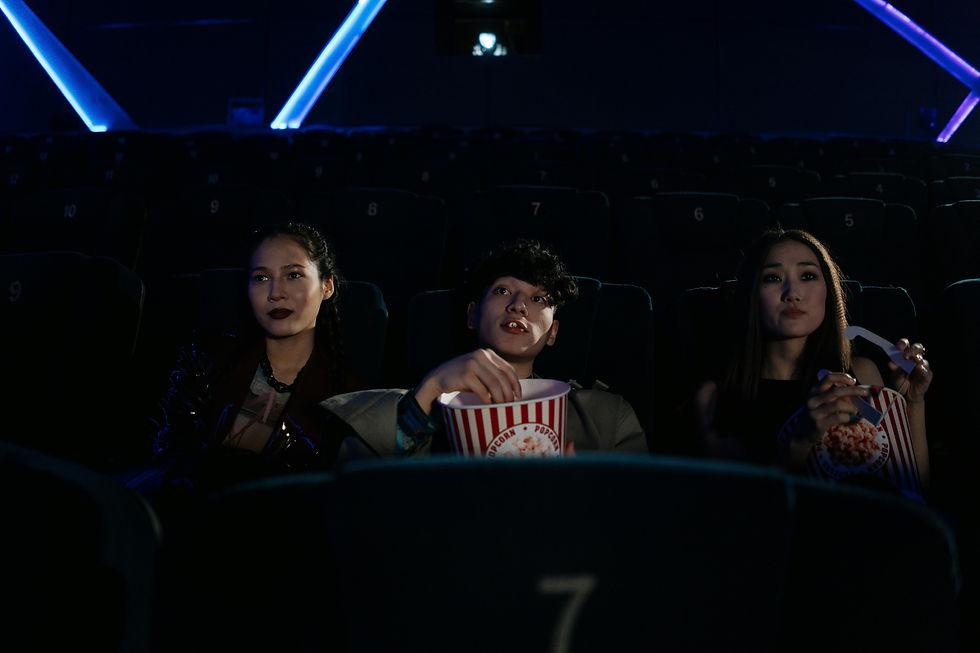
More and more, AI is being used to meet the demand for “dopamine hits.”1 You can already use it to generate your own tailor-made “dopamine ticklers” without leaving the comfort of your couch – and the potency of such will likely only increase in the future! While in some ways this has the potential to put more power back into the hands of the user rather than being “programmed by others,” (which can be a good thing, see footnote 2; see also last week’s article about acting rather than being acted upon), it also reduces the need for seeking escapism entertainment through things like purchased mainstream media content or performing arts. Gimmicks, fads, eyecandy, and appeals to our baser impulses (including the vulgar, sensual, and crude) have too often been a staple of the entertainment industry, but will no longer reliably draw a crowd to the theaters. Why in the world would you drag yourself to a theater and pay good money to sit through a show someone else wrote and someone else is performing when you can generate your own tailor-made content on your own device without leaving the comfort of your home?? I submit to you that perhaps it will only be if such entertainment can provide either transcendence, a community experience, and/or an immersive corporeal experience (each discussed further below).
The New York Times recently reported that as of September 2025, of the 46 new musicals that had opened on Broadway since the pandemic, only three had been profitable. “The costs of bringing song-and-dance spectacles to Broadway have skyrocketed in recent years, while ticket prices for musicals have remained relatively flat. Attendance still lags slightly below prepandemic levels.” But could there be other factors beyond just the huge economic hurdles that are causing shows not to succeed/sustain enough audience appeal once they open on Broadway? During this same time, shows like Wicked, Hamilton, and the Lion King have continued to endure and thrive on Broadway… Could it be because there’s an element of transcendence to them, in addition to the community and corporeal experience – an element of transcendence that seems to be missing from many of the other musicals opening more recently?

Religious scholar Terryl Givens has noted, “from an evolutionary point of view, poetry, music, [and] art in general, have no purpose. Leda Cosmides and John Tooby [who] direct the Center for Evolutionary Psychology at UC Santa Barbara… find themselves stumped in making sense of the humanities. ‘Almost all the phenomena that are central to the humanities are puzzling anomalies from an evolutionary perspective…. In order to navigate the world successfully, one needs accurate information. Survival depends on it.’ And yet, they note, the arts are foundational to all cultures. Why? Maybe Star Trek’s character “Seven-of-Nine” got it right. Survival is not enough. Survival, proficiency, competence—these are far from enough.”
I have already suggested that what audiences (including ourselves) really need and are seeking in the arts is a transcendent corporeal and/or social experience, not simply escapism. “The experience of aesthetic meaning in particular,” wrote literary critic George Steiner, “that of literature, of the arts, of musical form, infers the necessary possibility of 'real presence'... When we come face to face with the text and work of art or music… [it] is a wager on transcendence.”
So how can we help audiences make a “wager on transcendence”? The short answer, in my mind, is to create art and musical theater that actually does transcend – something that not only tickles the mind, but nourishes the soul – something that truly helps lift individuals and society from the inside out, like leaven in a loaf of bread! AI cannot transcend beyond data and algorithms, because in the end that’s all that it is! In contrast, for those who produce truly transcendent art, there is no need to fear becoming obsolete, even in the face of a world flooded with media content. As Givens put it, paraphrasing Michael Gazzaniga, “we need to make the humanities (culture, language, arts, literature, religion, philosophy, etc.) the baking soda, not just the frosting on the cake” of society.
AI is inherently intended to make things as efficient as possible. That means that we as human creators have an inherent advantage over AI, if we will recognize and lean into it… That is to use AI as a tool to increase efficiency in some areas so that we can make more time for the most important things that thrive best in “inefficiency” – Things like play, creativity, growth, human connection, listening, loving, understanding, being, and, yes, transcendence.
2) A Community Experience
The original performing arts entertainment venues were shared spaces like theaters and concert halls. Works like Shakespeare’s plays, Handel’s Messiah, Beethoven’s 9th Symphony, and 19th century operas, were originally presented in a shared social community experience, for both the performers and the audience.

In the early 1900’s, the silent motion picture was invented, and later the “talkies”, that is movies with sound. While the actors were no longer physically present in the theater with the audience, it was still a social experience for them to create the movies between themselves, and it was still a social/community experience for the audience, who gathered in a movie theater together to view it.

Next came radio and television, which moved entertainment into the home. What had previously been a social medium now became a more intimate family medium. TV’s were even originally advertised as a member of the family!
Next came the advent of personal computers and not long after came handheld personal electronics like phones and tablets – devices that we mostly use individually. Trends in target audiences have become increasingly segmented. It is not uncommon for individual members of a family to watch “their own show” on their own personal device in separate rooms. The resulting increase in social isolationism was a mental health concern even before the COVID-19 pandemic. Likewise, production of the content shown on such devices has become increasingly “mechanized/digitalized” and socially isolated as well.3
All of these various phenomena have combined to create a huge need for restoring social connection and building community in society. And musical theater is uniquely positioned as a powerful tool for doing just that!
Musical theater is frequently referred to as one of the most collaborative artforms, making it an ideal opportunity for creators and participants to experience community.
At the same time, it is also one of the few remaining artforms in which participants and audience members must all be physically present together in a shared space to experience it. As Broadway songwriter Benj Pasek (Dear Evan Hansen, etc.) recently explained: “Theater… requires you all sitting in a room with people that you may or may not know, going through an experience together, sharing a story, sitting next to potentially a stranger and laughing at the same time or crying at the same time or having a collective experience… And that is a very, very powerful thing to experience with a collective group of people.”
Jon M. Chu, director of the Wicked films and several other movie musicals, recently commented the following about going to the movie theaters, but I think his comments apply just as much to musical theater, if not more so: “[Theater] is the only space now where an algorithm isn’t involved. Where you have to put down your phone, you have to physically drive there, bring your friends, and sit in the dark and be told a perspective that you wouldn’t in any other way… It is the way we can communicate empathy, and you’re not distracted while cooking dinner or buying something online… If we do it right, we can actually really make change”!
3) Immersive Corporeal Experience
Stemming from the nature of having a physically shared community experience mentioned above, the other thing that theater (and musical theater in particular) offers is the potential to have a truly immersive corporeal experience.

Corporeal simply means in-body or having a body. The concept of not only having a body but having in-body experiences will become more and more vital to emotional, mental, and spiritual health in our increasingly remote, virtual, and digitally-filtered world as the future unfolds. Communications scholar John Durham Peters explained it this way in his landmark book Speaking into the Air: A history of the idea of communication (2000, p. 65): “The body is our existence, not our container… Any adequate account of the social life of word and gesture – of ‘communication’ in the broadest sense – needs to face the splendid and flawed material by which we make common cause with each other [i.e. the body].”
“Word and gesture” sounds like the very definition of musical theater to me! And how important our physical, human bodies are to the presentation and reception of such art! In musical theater, we experience being where we are, watching actual people in front of us, breathing the same air, sensing each other’s energy. The physical presence of performers, crew members, and audience members allows for the most immersive (and therefore potentially most transcendent) experience – one that can occur on a visual, auditory, vibratory, social, empathetic, emotional, spiritual, and intellectual level simultaneously. Additionally for performers, portraying a character through costume, movement, spoken word, and singing are all corporeal aspects of performance, as moving sets, adjusting lights and sound, etc, fill the same role for crew. And experiencing all of those elements in-person as the audience is an experience at a level far superior to experiencing those elements mediated through a screen. All of these things connect us with our bodies and deepen our experience of humanity. These corporeal experiences are an important element to mental, emotional, and spiritual health, and when done right, can create a truly transcendent experience.
There is also an element to corporeal live theater that is organic and imperfect (in the best kind of way). Live theater is human and beautifully imperfect in a way that AI generated art can never be. As Benj Pasek further comments, “I think we're in a moment in our culture that is a really unforgiving one. And I think we need to approach each other with humanity, and realize that being human is being fallible, and that we all should champion the possibility of redemption… [In Dear Evan Hansen] we've written a really flawed character on purpose. We wrote a flawed character who does things that are sometimes unsavory. And the reason for doing so is because we believe that stories should be parables to learn how to be better human beings. And so if this story can 1) serve as a guide for people to think about how they want to exist in the world and how they want to show up as a human being and do it better every day, that's one thing. And then [2] the worst moments in our lives should not be the things that we let define us. So how do we begin to forgive each other and forgive ourselves and become better human beings, better friends, better partners, better parents?”
Conclusion
In summary, while there are many benefits and pitfalls to the technology that surrounds us in the age of AI, as creators of musical theater it is important that we understand not only how AI affects us as a creator, but also how it affects our audience and their needs. The good news is that the proliferation of AI is not about to make musical theater obsolete. We can use musical theater as a tool to create transcendence, community, and corporeal experiences that will become ever more vital to human flourishing in the age of AI.
What do you think? Have we missed covering some ways that AI developments will directly impact musical theater and the performing arts industry? We’d love to hear your thoughts!
–––––––––
FOOTNOTES
1 Short form video addiction is a growing concern, for example. See here, here, and here for just a few examples of recent research studies on the topic.
2 In the decision for the 1984 Supreme Court Case Sony vs. Universal, which kept the VCR legal, the Supreme Court quoted a written testimony sent in by Fred (Mister) Rogers, which read in part: “I am opposed to people being programmed by others. My whole approach in broadcasting has always been 'You are an important person just the way you are. You can make healthy decisions.' Maybe I'm going on too long, but I just feel that anything that allows a person to be more active in the control of his or her life, in a healthy way, is important.” (Sony Corp. of America v. Universal City Studios, Inc., 464 U.S. 417 (1984), Footnote 27)
3 Much of media these days is produced via a pipeline rather than shot live with practical sets, effects, or even “practical actors.” Even if shot with physical actors, much content is now shot on green or blue screen, sometimes with actors shot separately (some actors find it hard to act to “just green/blue screen” such as in this famous example from The Lord of the Rings or Emma Watson’s near week of being alone on set for the mostly CGI Be Our Guest scene in the Beauty and the Beast live action remake).
© 2026 by Paul Anderson. Used with permission.
Thanks for your support for Summit Stages! If you liked this post, please consider sending it on to a friend.
If you are not already subscribed to my weekly newsletter, I'd be delighted if you'd do so here.
And a deeply, heartfelt thanks to those who've contributed to my tip jar Your support is greatly appreciated!
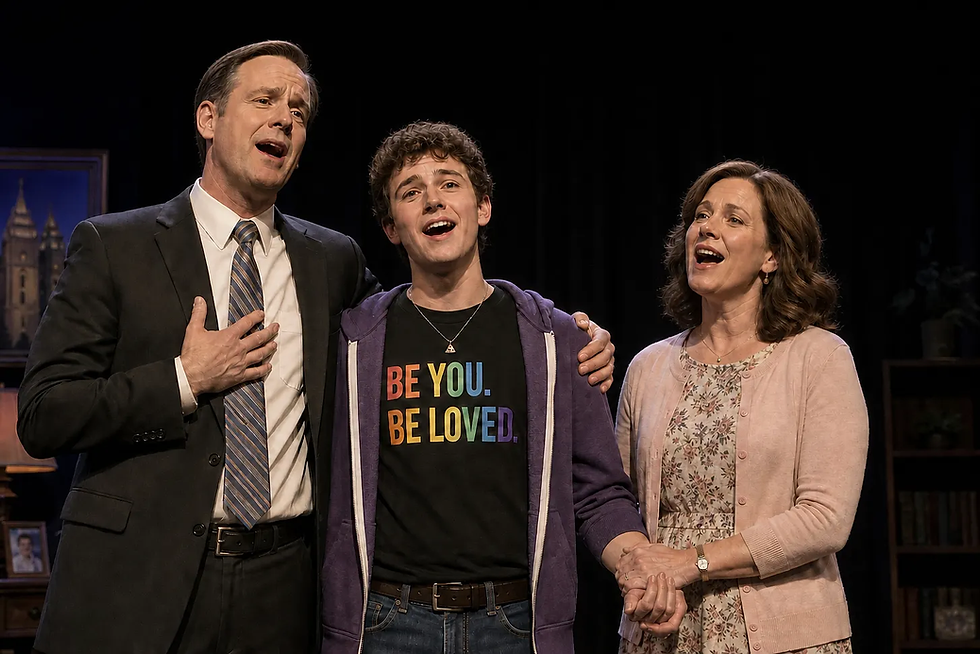


One other thing I have realized since we published this is that there is a kind of a third category we have mechanized that ties into making human and especially corporeal communication more and more priceless and needed! That is that in the early and mid 1900's we begin mechanizing and mediating communication! And that has made actual human to human communication, especially corporeal communication face to face all the more rare and priceless!
Thank you Rebecca… some great, informative content here. Also, very thought-provoking. This is a little off topic but I believe it’s relative…
I have discussed with you before my concerns about becoming obsolete because of AI. Maybe not in the field of musical theatre but still in performance whether as a motivational speaker/singer/songwriter or life coach and as I’ve thought more deeply about it, and prayed about it along with some researching., I agree with what you initially shared with me regarding those concerns…. one of the biggest advantages that AI gives us is time. It saves us time and we can do more good and even in a more effective and organized way with AI.
.Because what we do…